
Does AI have a 'cool' problem?
For young people and artists, AI and its architects are the object of derision. Does it matter?

ICYMI
Deepfakes and the battle for reality in Iran: The country “has become a laboratory for some of the most toxic excesses” of disinformation, says Mahsa Alimardani, but there is a way forward.
AI hiring is a small problem with a big signal: Using AI to dehumanise basic interactions is an avoidable own goal
What IVF Can Teach Silicon Valley About Regulation: Guardrails aren’t (always) the enemy of innovation
“As a human being, I have no tolerance for it – nor the ever encroaching, constant conversation we keep having about it. Even being asked about it. I just have no interest in it at all, because it’s all so fucking boring.”
Jacob Elordi is one of the hottest young stars in Hollywood. Starring in prestige TV series Euphoria and the social media sensation of a film Saltburn, nominated for an Oscar this year, and rumoured to be the new Bond. He comes from a long tradition of the heartthrob who feels their talent and seriousness with which they take their craft is undermined by their looks. And, judging by the above quote, he hates AI.
Artists hating AI isn’t new. And from anti-data centre activism to neo-ludditism and even violence, the growing backlash to AI in the West is now well-established.
But less understood is a more intangible trend: AI just isn’t very cool.
And some AI companies seem to be more aware of it than others.
***
Recent polling backs up what I hear from almost all my friends with tweens and teens, which is that this age group thinks AI is a bit naff: while 26% of Americans feel positively towards AI overall, among Gen Z its net favourability is minus 44.
It’s something that older people seem not to grasp. A viral video of a recent commencement speech in Florida illustrates the point: the speaker cannot believe, cannot understand, why every mention of AI — which she must have thought a slam-dunk to mention to these young people setting out in the world — is met with loud boos.
That doesn’t stop Gen Z from using AI of course, they have to. So why such a strong reaction?
Some reasons are obvious and serious: fears of job displacement and dehumanisation; environmental concerns; and seeing use of AI up close in an education setting has not inspired much hope or wonder.
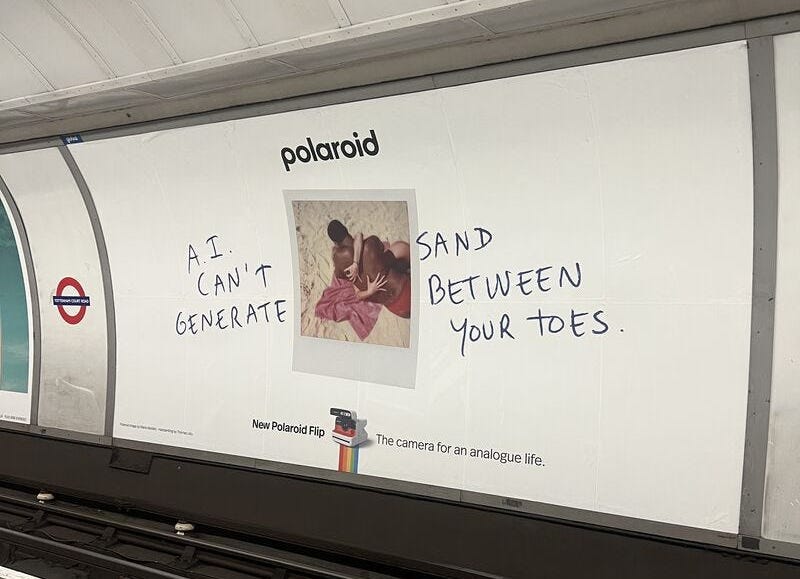
But there is something else going on, and as usual advertisers have caught on, judging by the wave of billboards I see on the London underground at the moment who are using not being AI as their selling point. It’s a sense that AI is just a bit…cringe.
It echoes a broader Gen Z trend of course; the resurgence of vinyl and cassettes, of disposable cameras and Instagram filters which mimic the flawed blurriness of those relics, of the growing demand for in-person experiences and authenticity.
But there is more at work. It’s not just the drastic change in perception of Big Tech, but in the impact of AI on their ability to hide their own power.
The Emperors’ new catwalk
The reputation of Big Tech has been declining for years, but quite how dramatically the industry has swung from trendy friends-of-Obama to social pariah seems to have taken even our leading tastemakers by surprise.
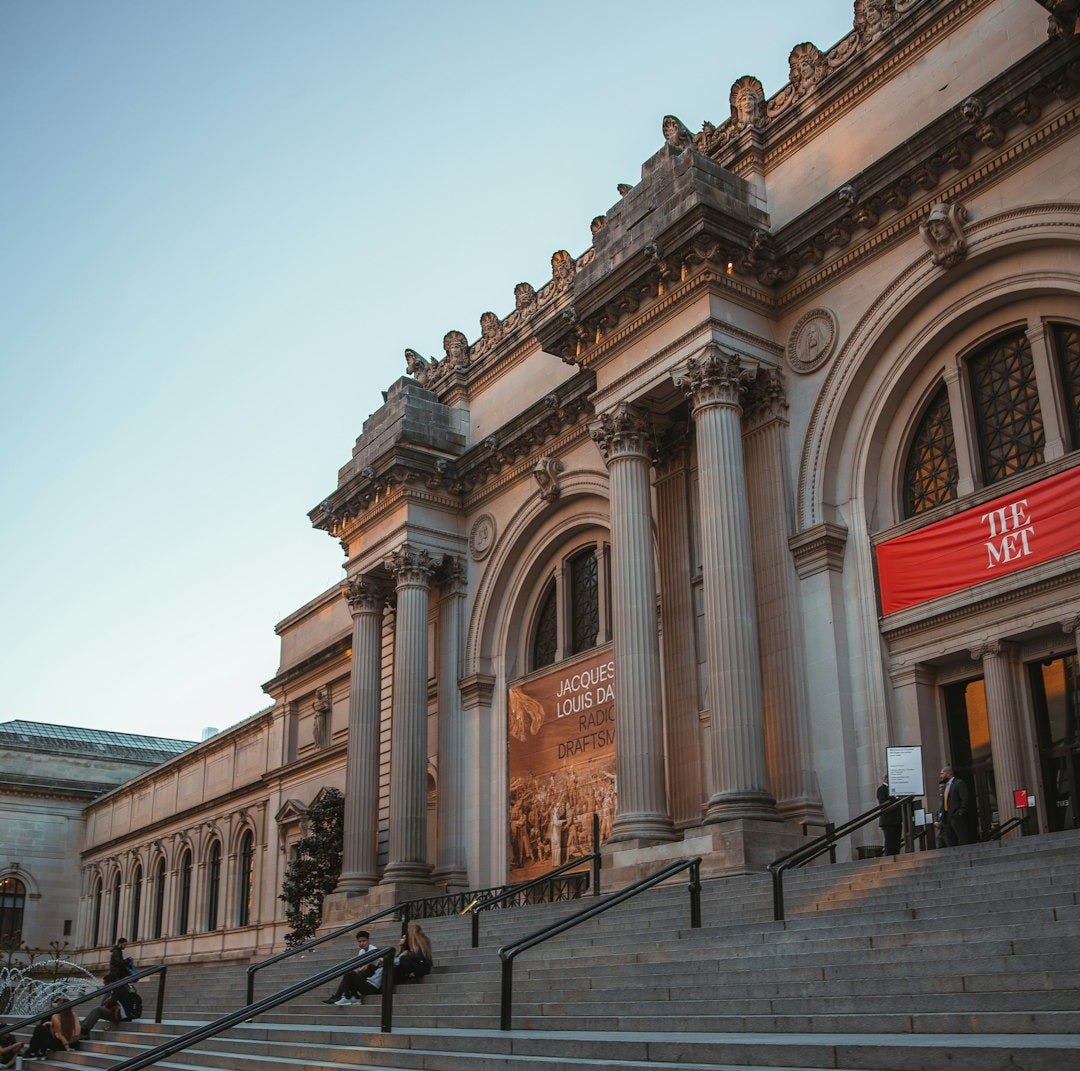
Anna Wintour, apparently, was taken aback by the strength of reaction against the Bezos’ sponsorship of this month’s Met Gala1. After all, Instagram has sponsored before and the tech industry has been attending en masse for years. But this year, some of the Gala’s most iconic and anticipated stars, including Zendaya (who is even more of a hot property than Elordi) boycotted for the first time.
So what’s changed? As with seemingly everything these days, the answer is AI.
Because the AI industry is dependent on something different than before: it’s not just about whose AI performs the best, it’s about who performs AI the best.
Winning the AI gold rush today requires bravado, bragging, posturing, jostling, hyping yourself up like two championship fighters before a boxing match.
Yes, the tech industry has always been dorky. And the recent, visible shift of tech bros from creators of cool new tools to powerful members of the establishment has created much less room for the benefit of the doubt.
But it used to be possible to thread that needle, with a lightness of touch and a careful comms plan.
AI, with its insatiable need for investment, compute, and talent, has blown that out of the water. It is an industry built as much on vibes as on value, and if you are going to win the battle for funding and talent and media coverage, then you need to really perform as all-conquering and all-powerful.
Any chance of sitting quietly in the background, attending the Met Gala in peace, any remaining veil of protection from the feeling of unnerving dominance disappears.
***
Beyond the tech bros, AI is also made less cool by association with the people most visibly using it: old people.
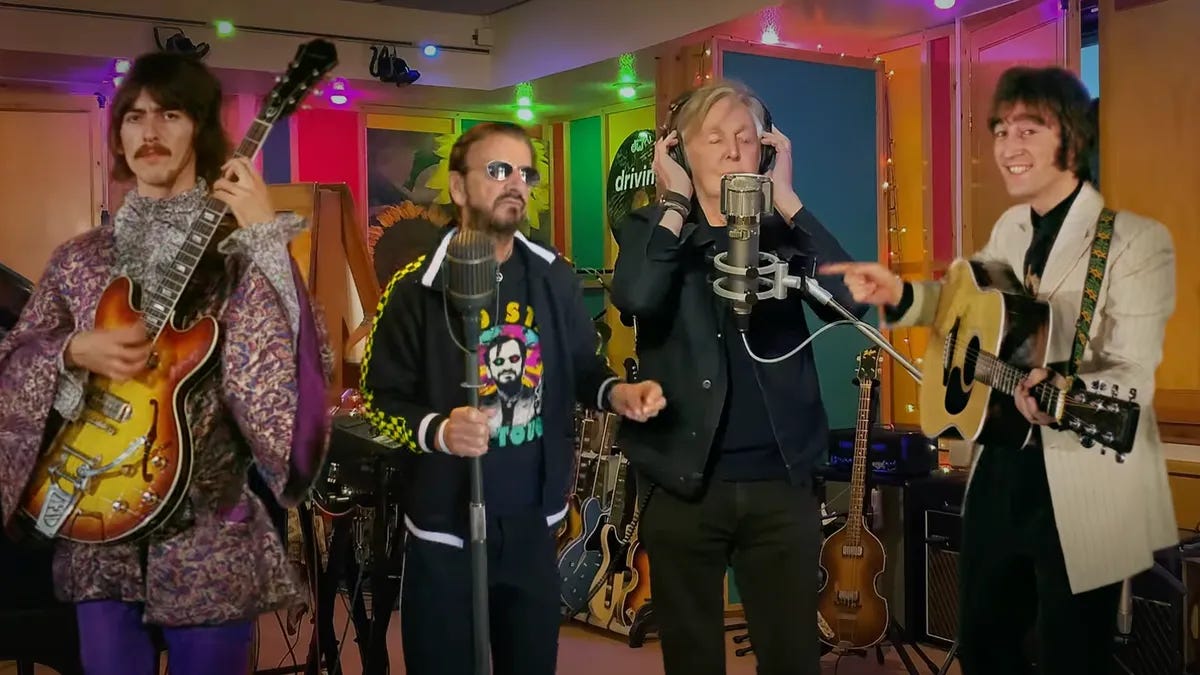
The octogenarian president is probably the most visible poster of AI-generated imagery at the moment. The (remaining) octogenarian Beatles’ video from last year didn’t help either.2 And people’s parents sharing terrible memes in the family WhatsApp chat compounds the effect.
Cultural trend or business problem?
One company that’s clearly thinking about this is Anthropic, and it’s an underrated part of its success.
Wandering in New York City last year, I happened into Graydon Carter’s achingly trendy Air Mail store in the West Village, and was fascinated to see that Dario Amodei’s ‘Machines of Loving Grace’ manifesto was on sale, printed in tasteful hardback.
It all made sense when a few weeks later Anthropic took over the store for a pop-up, framed as a ‘zero slop zone’ where customers were encouraged to read and drink coffee, complete with free ‘thinking caps’: baseball caps with ‘thinking’ written on them in the current hipster fave of washed-out, earth tones.
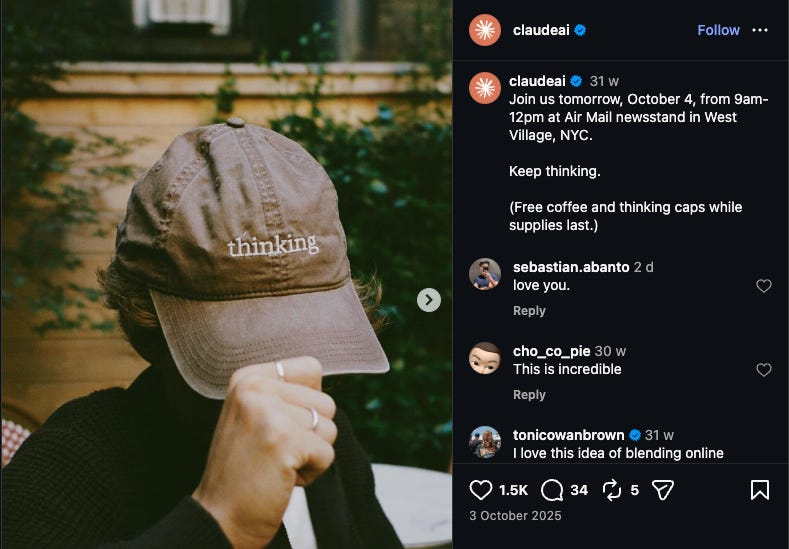
Anthropic understood that the perception of AI labs as plagiarists and purveyors of slop undermining critical thought is bad for business, and tried to counter this trend by aligning themselves with intellectualism and a vintage aesthetic. They also sponsored the Hay Festival when I attended as a speaker in 2024.
Contrast this with OpenAI’s AI-generated video feed Sora (which was shuttered for lack of use and expense) or Google, whose early marketing efforts around Gemini, including an advert depicting a father using AI to help his daughter write a heartfelt letter to her sporting hero, drew derision for their emptiness.
Vibes alone don’t explain Anthropic’s current boom, of course, nor the fact that it has better talent retention than most of its competitors. It has genuinely excellent products, a successful enterprise strategy and a savvy team. But sentiment matters, and is almost certainly part of the reason that it seems to be outplaying its closest rival in the media wars.
***
Beyond the inside baseball of who’s-up-who’s-down, it’s not clear if this is actually a problem for the AI industry as a whole. After all, adoption is growing even among the demographics most opposed to it. Provided it’s useful, tech doesn’t have to be cool to become ubiquitous.
But it’s also true that tech brands like to become, and stay, “hot” - and that this is itself a strategy for achieving ubiquity. Apple has been masterful at this: nearly 20 years after the first iPhone was released, people still line up for the new release and pore over the new colours. It remains an iconic product and a status symbol.
If AI companies can’t live up to the excitement of early Noughties tech, and can’t capture the imagination of the younger generation, this could have an indirect effect on whether the technology itself achieves its potential: either by losing out on potential users, or on future talent, since it’s well known that the hottest start-ups can usually attract the most sought-after employees.
It may just be a symptom of the next stage in the transition of tech companies and their founders from relative outsiders and disruptors to the most powerful people in the world.
The Bezos Met Gala showed it’s impossible to buy ‘cool’ - but does this really matter when you can buy everything else?
It was an odd backlash. Creative people rightly castigate the lack of support for the arts from the tech industry and compare their philanthropic efforts unfavourably with Carnegie’s libraries and Getty’s art collection. The Met Gala is first and foremost a fundraiser for the museum, and bringing in one of the world’s richest men to contribute is surely a win?
I am a huge fan of Get Back but I am sorry, Peter Jackson, this was a miss.
I've also noticed the strong critique from (some) young people in the attitudes research we've done, and in young people I know. You've talked about jobs, environment and coolness, but for some young people there is also a deeply political critique about power and exploitation.
Being more online, embedded in fandoms, they've seen artists' work being exploited without consent. The complaint is not just or even primarily about their job security (for many artists involved in fandoms, their art is simply expression, not a means of making money). It's about unfairness and extraction.
There's also a straightforward critique of the concentration of power and wealth that is so evident in the current AI landscape.
Again, I'm not saying all young people feel this way, but there is certainly a subset that feel violent antipathy towards AI and its makers, not just a roll-your-eyes-at-the-boomers turn away from it.
This is a timely piece, Verity. Concerns over AI - whether ethical, aesthetic or economic - need to be addressed by every business. Employees are rightly wanting a transparent discussion about the limits of AI deployment.